THE ZONE SIGNAL · SIGINT #003

Mix it up, then make it stick

· Curated by The Zone Signal

Preview image for Habit Stacking: How to Build New Habits by Taking Advantage of Old Ones
Image: James Clear
article9 min readHabits

Habit Stacking: How to Build New Habits by Taking Advantage of Old Ones

via James Clear

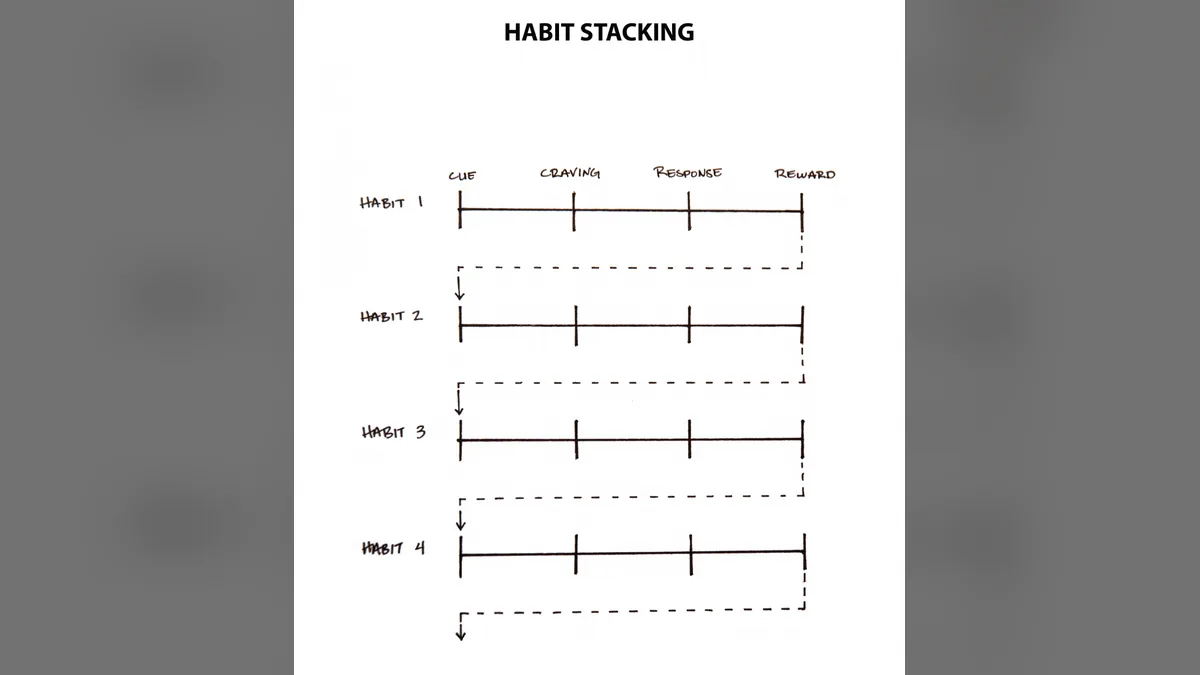
James Clear explains synaptic pruning—adults have fewer but stronger neural connections than newborns—and shows how to exploit existing strong habit connections via 'habit stacking': attaching a new habit to an already established one using the formula 'After/Before [CURRENT HABIT], I will [NEW HABIT].'

  1. Average adult brains have 41 percent fewer neurons than newborn brains due to synaptic pruning.
  2. Habit stacking pairs a new habit with an existing habit instead of a specific time/location.
  3. Formula: 'After/Before [CURRENT HABIT], I will [NEW HABIT].'
  4. Cues must be highly specific and match the desired habit's frequency to work well.
  5. You can chain multiple small habits into larger stacks to build momentum.

Habit stacking is the least romantic and most reliable way to make a new practice survive a bad week. The formula is literal: after or before an existing habit, I will do the new one. Clear's explanation is that the adult brain has pruned away what it does not use, so the routines you already run daily are the strongest wiring you own — you borrow their momentum instead of building from nothing. The failure mode he names is a vague cue: the anchor has to be specific and happen as often as you want the new habit.

Try this week

Write one sentence: after [something you already do daily], I will [the smallest version of the practice]. Five minutes counts. Run it for seven days without changing the anchor.


Read the full article on James Clear →
Preview image for Why the Progress You Make in the Practice Room Seems to Disappear Overnight – PART 1
Image: Bulletproof Musician
article9 min readCognitive Flexibility

Why the Progress You Make in the Practice Room Seems to Disappear Overnight – PART 1

via Bulletproof Musician

Blocked practice (repeating one passage over and over) feels productive but doesn't stick overnight. Clarinetist Christine Carter explains that random/interleaved practice—switching between short segments of different excerpts or tasks—produces far better long-term retention due to the contextual interference effect.

  1. Blocked practice repeats one task fully before moving on; random practice interleaves multiple tasks in short segments.
  2. 1994 study: random-schedule baseball players improved 57% vs. 25% for blocked, same number of practice reps.
  3. Reconstructing an action plan after switching tasks activates the brain more, boosting long-term learning.
  4. Practical method: divide practice into short timed segments (e.g., 3 minutes) rotating between excerpts A, B, C.
  5. Carter's preliminary research at the Brain and Mind Institute supports random practice for musical passages over blocked practice.

“This type of practice sticks.”

— Christine Carter

This explains the most demoralising pattern in practice: it was clean last night and it is gone this morning. Carter's answer is that blocked repetition produces performance during the session and not much learning after it, because the brain habituates to a repeated stimulus. Interleaving forces you to rebuild the action plan every time you come back to a task, and that rebuilding is where the learning happens. In a 1994 baseball study, hitters on a random schedule improved 57 percent against 25 percent for the blocked group.

Try this week

Take the thirty minutes you would spend on one passage and cut it into three-minute blocks across three passages, cycling A-B-C-A-B-C. It will feel worse in the room. Check it again tomorrow.

Read the full article on Bulletproof Musician →
Preview image for How to practice effectively...for just about anything
Image: TED-Ed
video5 min watchDeep focus

How to practice effectively...for just about anything

via TED-Ed

Practice improves skill not through "muscle memory" but by increasing myelin insulation on neural axons, making brain-to-muscle signals faster and more efficient. Mastery depends less on total hours and more on focused, consistent practice targeting weaknesses at the edge of current ability.

  1. Repetition increases myelin sheath layers around axons, creating faster neural "superhighways" to muscles.
  2. Muscles have no memory; gains come from myelinated neural pathways, not "muscle memory".
  3. Minimize distractions: one study found 260 students stayed on task only 6 minutes at a time.
  4. Elite athletes, musicians, and dancers often practice 50-60 hours per week in multiple short daily sessions.
  5. 144 basketball players study: mental-only practice improved free throws nearly as much as physical practice after two weeks.

A short primer on why some practice hours count and others do not. The framing is myelin: repeated focused firing of a movement pattern insulates that circuit, which is why the quality of your attention during a rep changes what the rep buys you. The practical content is unglamorous — practise slowly, strip out distractions, stay consistent rather than heroic. It pairs directly with the interleaving piece above: that one tells you how to schedule your reps, this one tells you what state to be in for them.

Try this week

Run one session with your phone in another room and the tempo cut by a third. Nothing else changes. Count how many clean reps you get compared with a normal session.

Watch the full video on TED-Ed →
Preview image for The surprising habits of original thinkers
Image: TED
video16 min watchCognitive Flexibility

The surprising habits of original thinkers

via TED

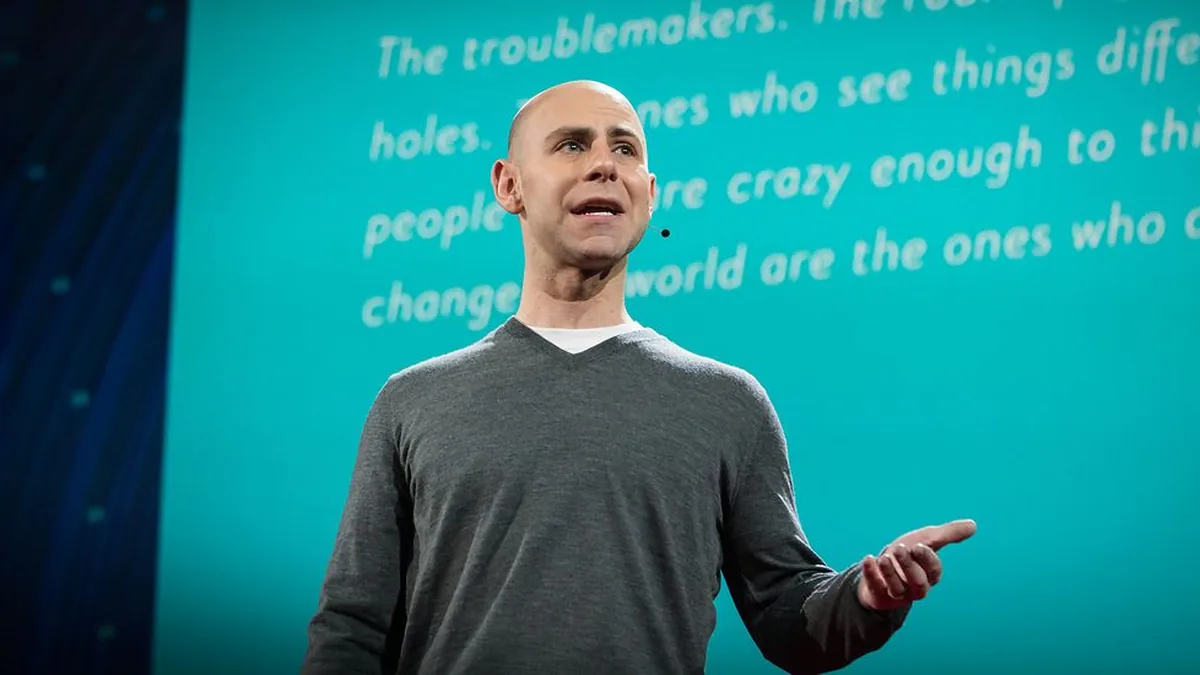
Adam Grant explains that original thinkers aren't fearless or fast-moving; they procrastinate moderately, doubt their ideas rather than themselves, and generate huge volumes of ideas—including many bad ones—to eventually land on something truly original.

  1. Moderate procrastinators were rated more creative than chronic procrastinators or precrastinators in survey and experimental studies.
  2. In an experiment, moderate procrastinators using Minesweeper were 16% more creative than those who started right away or delayed too long.
  3. First movers had a 47% failure rate versus 8% for improvers across 50+ product categories, so being original doesn't require being first.
  4. Idea doubt (questioning the work) is energizing, while self-doubt (questioning yourself) is paralyzing and leads to freezing.
  5. 85% of people stay silent on their biggest ideas out of fear, yet originals generate huge volumes of ideas, including many bad ones, to find great ones.

“You call it procrastinating. I call it thinking.”

— Aaron Sorkin
Jump to 5 key moments
  1. 1:30Precrastination vs. procrastination confession
  2. 3:37Data on procrastination and creativity
  3. 7:08First-mover advantage is mostly a myth
  4. 9:08Self-doubt vs. idea doubt
  5. 11:41Fear of failing to try, and generating more ideas

Grant studies people who generate genuinely new ideas, and the habits he found are not the ones you would guess. They doubt themselves, they procrastinate in a particular way that leaves ideas half-finished and incubating, and above all they produce enormous quantities of bad work. His line is the useful one: the greatest originals are the ones who fail the most, because they are the ones who try the most. For a plateaued performer that reframes a bad session as throughput rather than verdict.

Try this week

Deliberately generate ten variations of one thing this week — phrasings, routes, approaches — without judging any of them. Keep the two you would never have reached if you had stopped at three.

Watch the full video on TED →
Preview image for The Science of Making & Breaking Habits
Image: Huberman Lab
podcast1 hr 48 min listenRhythm

The Science of Making & Breaking Habits

via Huberman Lab

Andrew Huberman explains the neuroscience and psychology of forming and breaking habits, covering limbic friction, task bracketing, and dopamine's role in reward prediction error. He offers two concrete programs: a phase-based daily schedule and a 21-day habit installation system, plus a method for breaking bad habits using 'positive cargo.'

  1. Habit formation time varies wildly: a 2010 Lally study found it took 18 to 254 days depending on the person, for the same habit.
  2. Divide the day into three phases (0-8, 9-15, 16-24 hrs after waking) matched to neurochemistry: hard habits in Phase 1, easier ones in Phase 2, protect sleep in Phase 3.
  3. 21-Day Tool: target 6 habits daily, expect only 4-5 done, reset in 2-day chunks, no compensation for missed days, then test retention.
  4. Task bracketing (dorsolateral striatum activity before/after a habit) and state of mind predict habit strength better than fixed scheduling times.
  5. To break bad habits, immediately insert a positive replacement behavior right after, creating an 'open loop' that weakens the habit via long-term depression.
Jump to 5 key moments
  1. 11:40How long habits really take to form; limbic friction
  2. 38:16Phase-based habit plan: Phase 1
  3. 1:04:57Should we reward ourselves? When and how
  4. 1:18:22The 21-day habit installation and testing system
  5. 1:37:50Breaking bad habits with 'positive cargo'

The part worth stealing here is timing. Huberman splits the waking day into three phases: the first eight hours after waking, when dopamine and norepinephrine run high and the hard, resisted habits are cheapest; hours nine to fifteen, better suited to low-resistance work; and the final stretch, for sleep and consolidation. He calls the resistance you have to overcome limbic friction, and the research he cites puts habit formation anywhere between eighteen and two hundred fifty-four days.

Try this week

Move the practice you skip most often into the first eight hours after you wake, every day this week. Keep everything else where it is and count how many days it actually happened.

Listen to the full podcast on Huberman Lab →

Get the next one in your inbox

Free · one email a week · unsubscribe anytime

© 2026 ShapeTheZone LLC. All rights reserved.

SigInt #003 — Mix it up, then make it stick · The Zone Signal